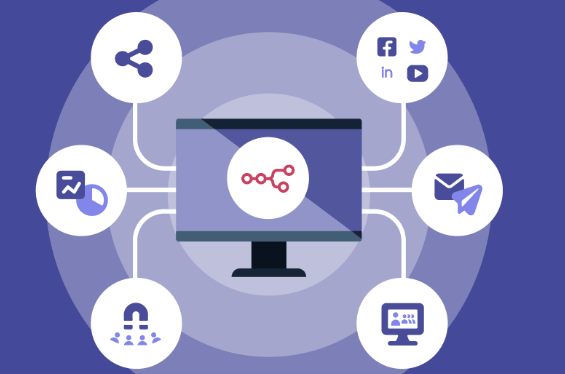

Marketing automation tools translate growth ambitions into repeatable, data-driven workflows across stages—from pilots to scale. They emphasize lead scoring, behavioral triggers, and omnichannel nurturing, while tracking deliverability, engagement, and attribution. The best choices balance speed, integration breadth, governance, and privacy. Real-world playbooks link email, social, and chat with testable cadences and stage gates, enabling faster conversions and cleaner handoffs. The discussion invites a closer look at how goals shape implementation and ongoing optimization.
How Marketing Automation Works for Growth Stages
Marketing automation functions differently across growth stages, aligning capabilities with the organization’s evolving needs. In early stages, systems prioritize lead scoring and basic nurturing, enabling scalable pilots. As maturity increases, behavioral triggers refine engagement, automating timely responses. Data-informed adjustments track conversion vectors, ensuring alignment with revenue goals. The approach remains disciplined: measure, iterate, and expand automation to support freedom-driven growth.
Core Tools and Features You’ll Actually Use
Core tools and features form the backbone of practical marketing automation, translating strategic goals into repeatable workflows. Data-driven assessment shows that core capabilities streamline campaigns, optimize resource use, and improve visibility. Lead scoring aligns segments with intent, while email deliverability measures informed deliverability tactics. Strategic configuration prioritizes measurable outcomes, enabling freedom to iterate, test, and scale without compromising precision or control.
Choosing the Right Automation for Your Goals
Choosing the right automation aligns capabilities with objectives, ensuring that workflows scale without sacrificing precision. Evaluations compare platforms by alignment metrics: processing speed, integration breadth, and governance controls. For optimal results, identify the target audience and map data flows to privacy requirements, balancing personalization with data privacy. Strategic selection prioritizes measurable outcomes, scalable architectures, and transparent vendor commitments to security and accountability.
Real-World Playbooks: From Lead Nurturing to Omnichannel Messaging
Real-world playbooks connect lead nurturing strategies to omnichannel messaging through measurable workflows and concrete outcomes. Data-driven frameworks map stage gates, engagement triggers, and attribution, yielding scalable sequences across email, social, and chat. The approach emphasizes freedom to optimize, not constrain, by testing hypotheses and refining cadences. Results include faster conversion, smoother handoffs, and transparent metrics guiding strategic iterations in omnichannel messaging.
See also: Marketing Innovation Through AI
Frequently Asked Questions
How Much of Marketing Automation Should We Outsourcing Versus In-House?
The outsourcing balance depends on in house capability gap analysis and strategic objectives; organizations should maximize core capabilities internally while outsourcing repetitive, scalable tasks to optimize efficiency, data quality, and freedom to pursue disruptive initiatives.
Which Metrics Define Success for Automation Beyond Open Rates?
Metrics beyond open rates include funnel attribution and metrics benchmarks, enabling precise ROI evaluation. The analysis shows automation success hinges on conversion lift, engagement depth, and lifecycle velocity, translating data into strategic decisions that preserve freedom while driving growth.
Can Automation Tools Replace a Dedicated Marketing Operations Role?
Automation tools cannot fully replace a dedicated marketing operations role; they augment capabilities, but require ongoing governance. Automation roles depend on data governance to ensure accuracy, consistency, and strategic alignment across campaigns, analytics, and cross-functional decision-making.
What Is the Typical ROI Timeline for Automation Implementations?
A parable shows a clockmaker balancing gears: typical ROI varies, with an automation timeline stretching from months to one year. Outsourcing vs in-house matters; metrics beyond opens guide decisions, while data privacy guides every workflow in replacing marketing ops.
How Do You Ensure Data Privacy Across Automation Workflows?
Data privacy across automation workflows is achieved through robust privacy controls and data governance frameworks, ensuring access, retention, and consent are enforced. The approach is data-driven, analytical, and strategic, aligning with stakeholders seeking autonomy and transparent accountability.
Conclusion
Informed insights indicate intelligent implementations influence incremental impact. By benchmarking behaviors, businesses blend best-practice provisioning, precise personalization, and persistent performance tracking. Strategic structuring stabilizes scalable sequences, segments stakeholders, and seizes sector-specific signals. Measured metrics—deliverability, engagement, attribution—drive disciplined decision-making, diminishing drift and duplicative workloads. Proven pipelines propel prospective profits, providing pragmatic, predictable progress. Ultimately, optimized orchestration offers objective outcomes, enabling organizations to outrun rivals, outperform benchmarks, and continually refine real-time, revenue-ready routines.
